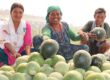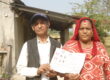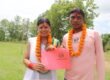
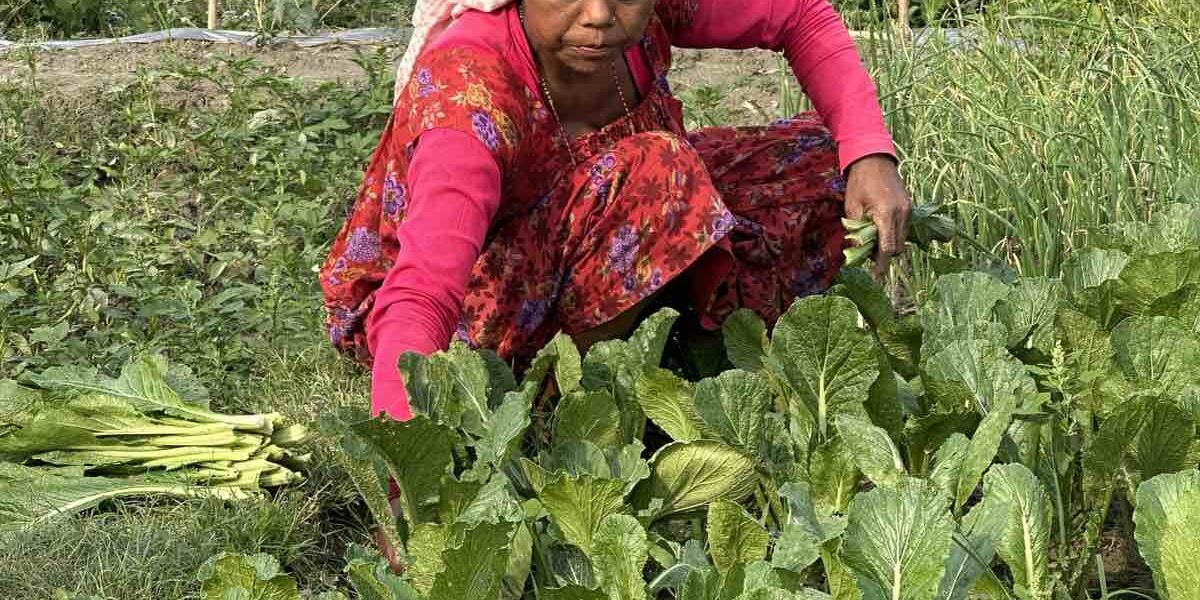
Ramdewali Chaudhary, 56, is a member of the Shanti Swabalambi Women Farmers’ Group in Rapti‑6, Pathargadhawa. Once burdened by years of bonded labor and exploitative brick‑factory work, she and her family have rebuilt their lives through agriculture.
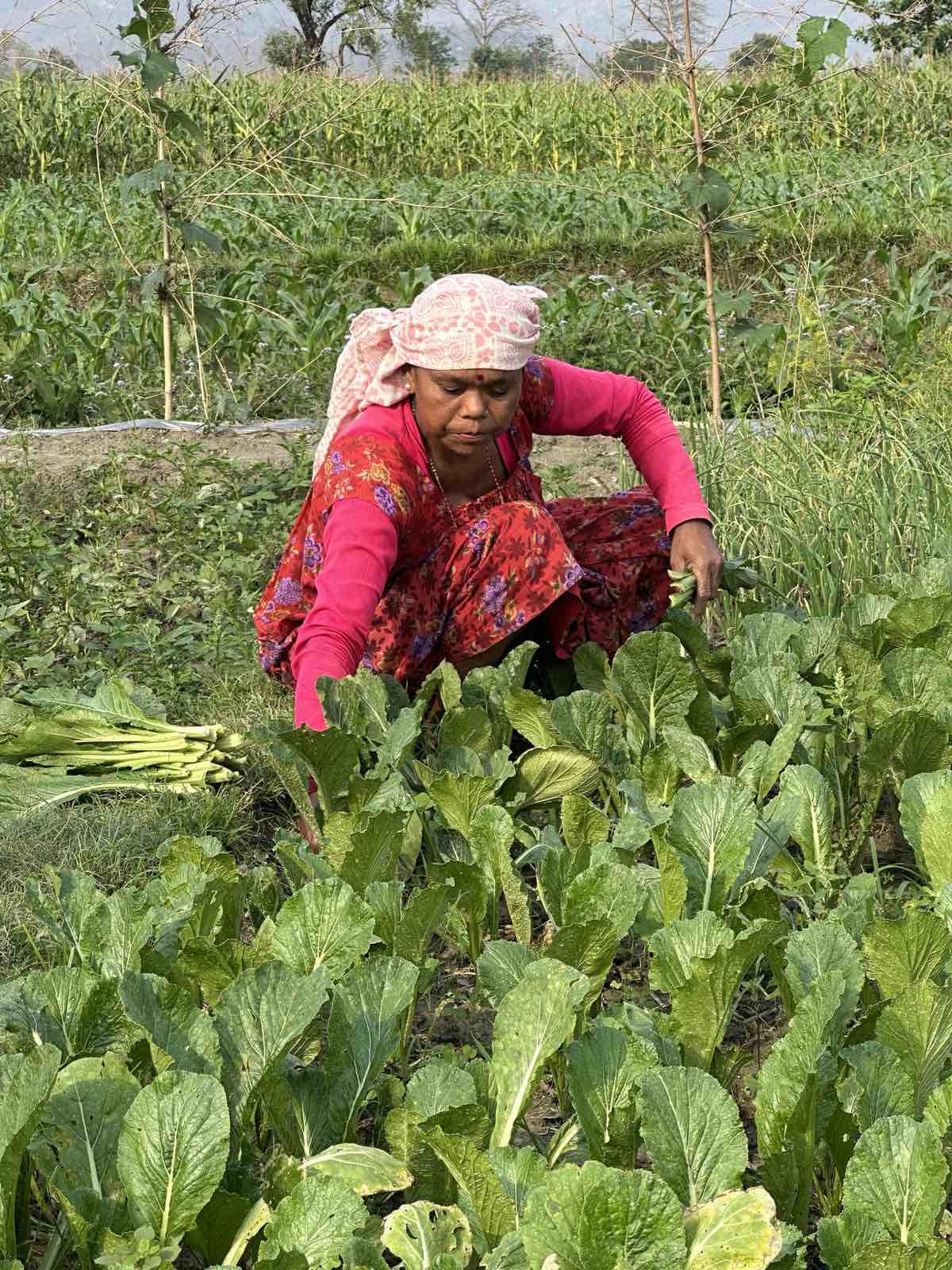
Starting with 0.135 ha of leased land under a written contract farming agreement with the landowner, and supported by subsidies from the rural municipality, she began vegetable cultivation. Within a month, she harvested 5 quintals of produce worth NPR 20,000, enough to purchase paddy seeds and fertilizer. Her determination soon expanded her farming to 0.4 ha.
Ramdewali now confidently markets her harvest herself. Today, she earns nearly NPR 2,40,000 per year. Despite the physical strain of carrying vegetables to Sisanhiya Market at dawn, she perseveres.
Farming has given the family stability and enabled them to purchase land. Yet, the ownership certificate remains solely in her husband’s name, underscoring the urgent need for joint land rights to secure women’s empowerment.
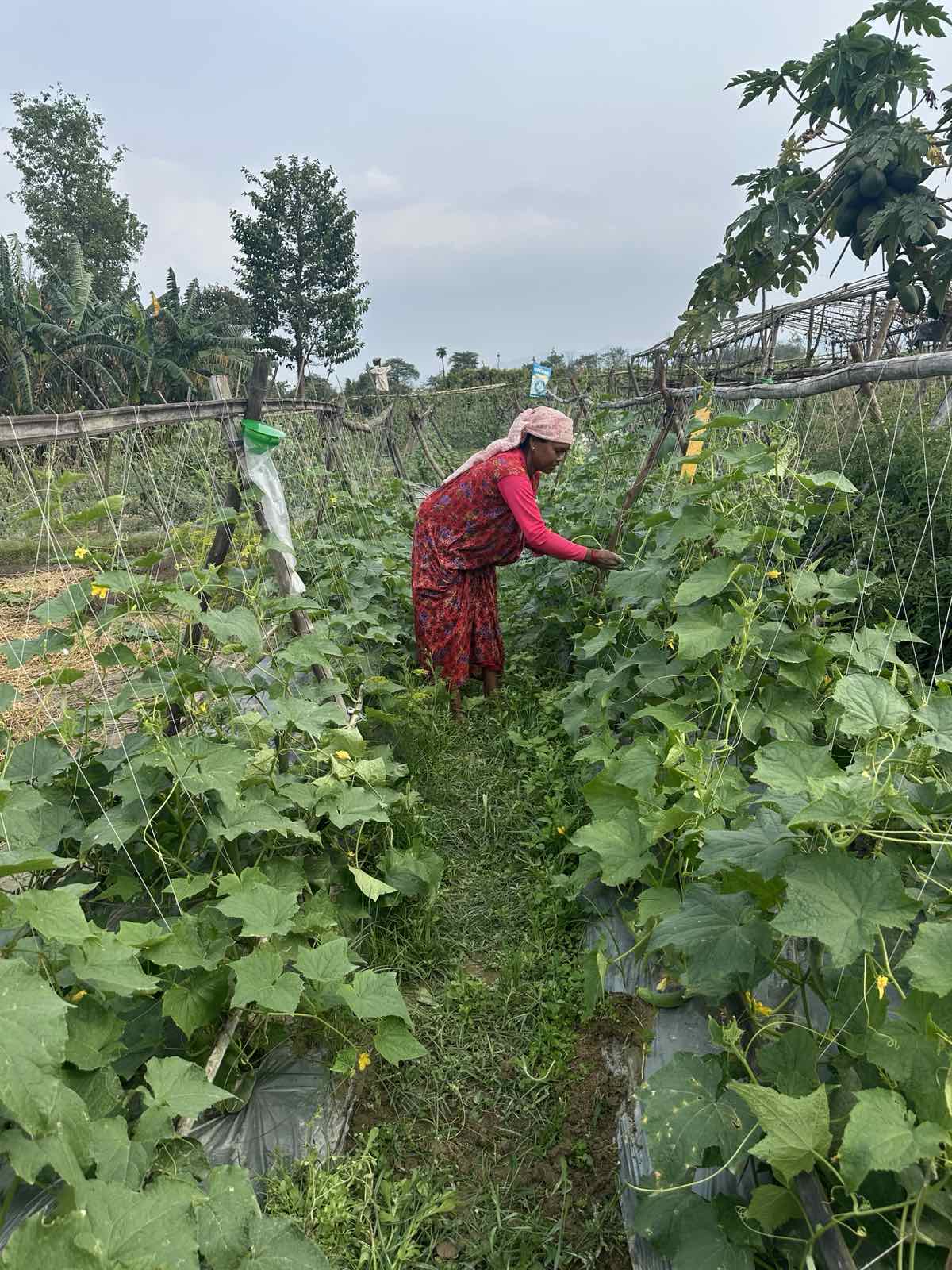
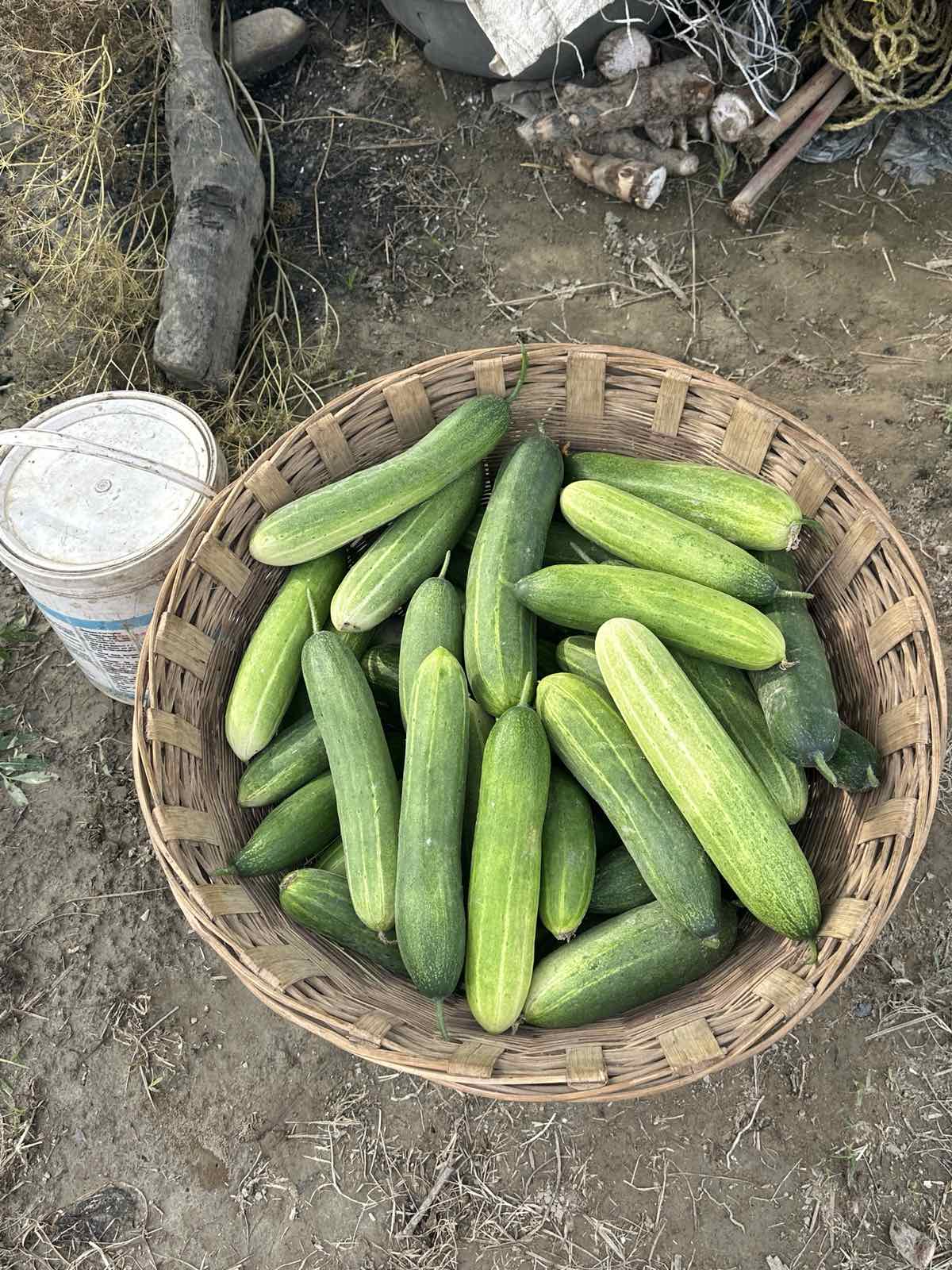
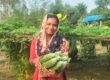
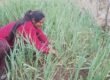
A variety of vegetable harvests are seen
Strengthening Climate-Resilient Farming
The MAFRA‑CSA program has continuously strengthened Ramdewali’s farming journey by providing technical guidance, inputs, and women‑friendly tools such as garden rakes, hand ridgers, and double drum seeders to reduce labor. She has also received insect pest management traps, drip irrigation systems, and climate‑resilient vegetable seeds.
Ramdewali shares:
“I was unaware of insect traps before. Now, with program support, I use yellow sticky traps, blue sticky traps, and funnel traps in cauliflower, chili, and tomato fields. They work very well for pest management. I prepare and use botanical pesticides learned from training. They are healthy, effective, and cheap to make.”
The Climate Smart Program is currently running under the program‘ A safety net of innovative land tenure solutions for near landless and sharecroppers and for a greener rural Nepal L4ACT which is currently being implemented by UN-Habitat with funding from Ministry of Agriculture, Food and Rural Affairs (MAFRA) of Republic of Korea and in collaboration with Ministry of Land Management, Cooperatives and Poverty Alleviation (MoLMCPA) Government of Nepal is under implementation in Deukhuri Valley of Dang district and supported by Community Self Reliance Centre (CSRC), Good Neighbors International (GNI) Nepal, and South Korea based organizations, Korea Rural Economic Institute (KREI) and Korea Land and Geospatial Informatix Corporation (LX).
Written by: Aparajita Gautam and Neelam Tripathi