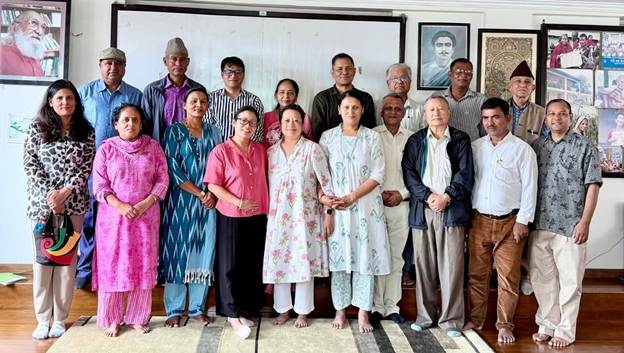
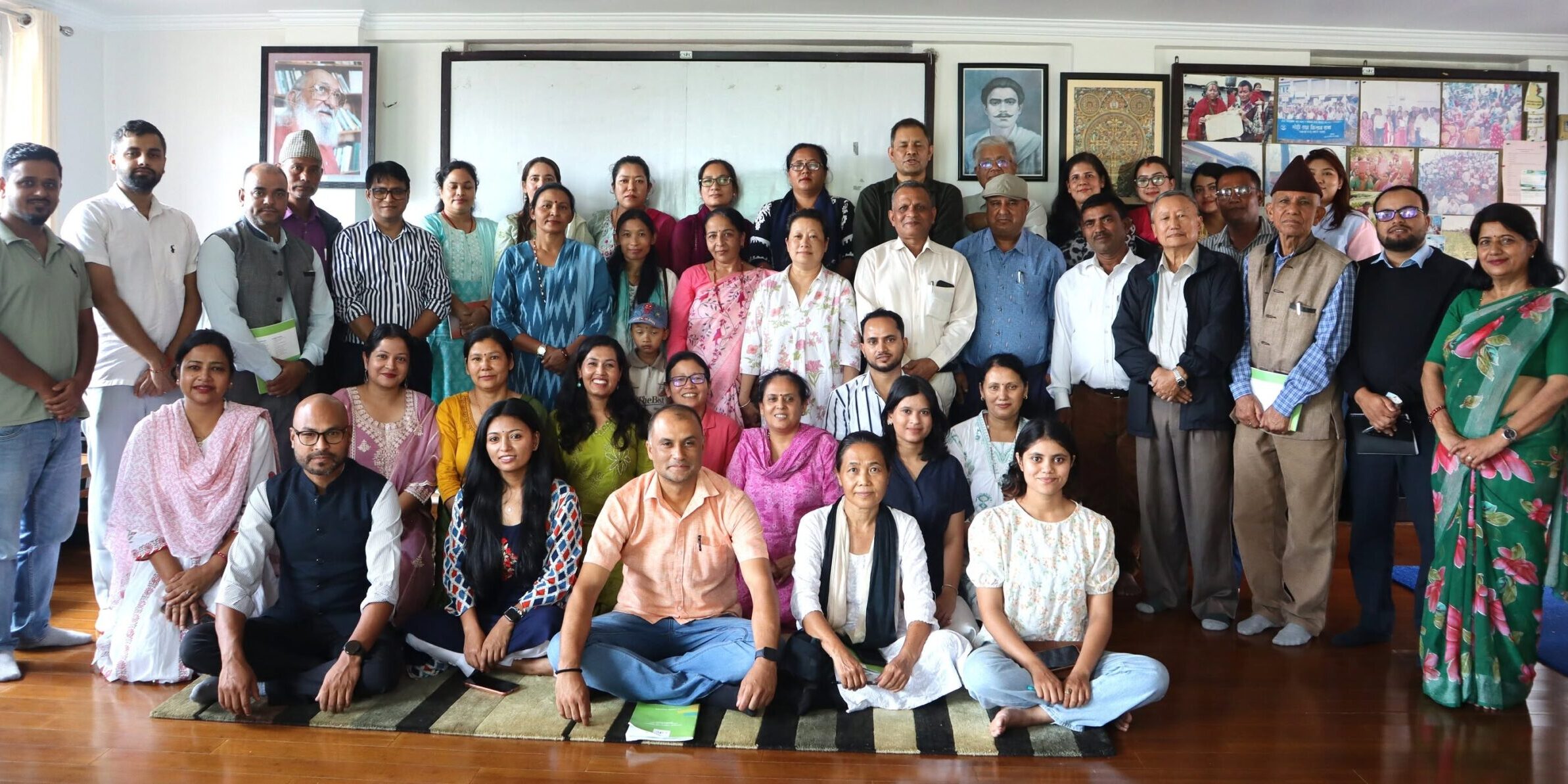
On 4th October 2026, the Community Self Reliance Centre (CSRC) convened its 31st Annual General Assembly at Bhumighar, Dhapasi, Kathmandu. A one‑minute silence was observed to honor and in memory of those who lost their lives in the Rasuwa flood.
The Assembly was hosted by Executive Member Durga Kumari BK, and formally inaugurated by Executive Board Chair Uma Aryal, accompanied by former Chairpersons Gopal Thapa Magar and Suresh Dhakal, who lit the traditional oil lamp. General members and staff joined the event.
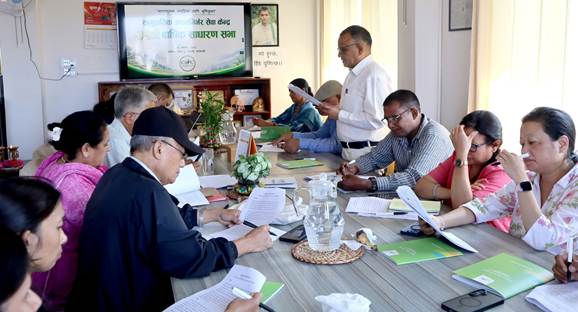
Man Bahadur Chhetri, Secretary, presented the progress report for the fiscal year 2082/83 and the programme for the fiscal year 2083/84. Similarly, Cheli Gurung, Treasurer, presented the budget utilization report for FY 2082/83 and the proposed budget for FY 2083/84.
To showcase CSRC’s interventions and impact, a video was presented with photo gallery highlighting key milestones and community-level achievements. Building on this, Executive Director Jagat Deuja reviewed the organization’s accomplishments over the past year and emphasized its long-standing work. He noted CSRC’s expansion into reconstruction after the 2015 earthquake and its current focus on climate change. Looking ahead, he outlined strategic priorities for fiscal year 2083/84, including digitization of land governance systems, promotion of agroecology, and strengthening positivity and teamwork within CSRC.
The event recorded 47 participants, with 23 men and 24 women. In terms of diversity, 13 participants were from indigenous communities, five from Dalit communities, and 29 represented Brahmin/Chhetri communities.
Suresh Dhakal (Former Chairperson) observed that while some targets were achieved strongly, others were met only moderately and recommended clarifying the reasons for these discrepancies. He further added that CSRC has a unique identity and credibility and stressed that while land and agrarian rights remain central, collective action and climate change must now be linked to agroecology and family farming, which is vital for food security.
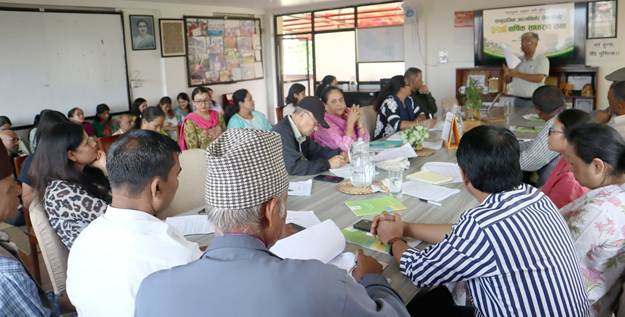
CSRC Executive Director emphasized the need to develop a clear framework for agroecology, strengthen local land governance, improve access to land, and repackage campaigns to remain relevant. He highlighted CSRC’s resilience since the 2015 earthquake and its leadership in climate change and response initiatives, including 21 ongoing projects. Parbati Thami (General Secretary) of the National Land Rights Forum extended congratulatory remarks. Gopal Thapa Magar, Former Chairperson, praised CSRC’s strong foundation, credibility, and international commitments.
The event reaffirmed CSRC’s commitment to land rights, agrarian reform, and climate resilience. With renewed strategies and strengthened partnerships, CSRC is ready to continue its leadership in advancing secure land tenure and promoting agroecology, while also moving ahead in disaster risk management.