Pratibaddha IV: Whole of Society Approach to Strengthening and Scaling Shock Responsive and Anticipatory Multi-Hazard Preparedness and Response in Western Nepal
Funding By: European Union Humanitarian Aid
Implementing Partner: People in Need (PIN), Save the Children International (SCI), Community Self Reliance Centre, Centre for Development and Disaster Management-Nepal (CDM), Butwal, Progressive Youth Society (PYS), Bajhang, and Hilly Region Development Campaign (HRDC), Jajarkot
Duration: October 2026 – January 2028
Budget: NPR. 73,658,244
Working Area:
| S. N. | Province | District | Local Government |
| 1 | Sudurpaschim | Bajhang | Thalara RM and Kedarsyu RM |
| 2 | Karnali | Jajarkot | Nalgad Municipality and Barekot RM |
| 3 | Lumbini | Pyuthan | Mandavi RM and Sarumarani RM |
| 4 | Bagmati | Rasuwa | Uttargaya RM and Gosainkunda RM |
| 5 | Dhading | Gajuri RM and Galchhi RM |
Project Overview:
Pratibaddha-IV: Whole of Society Approach to Strengthening and Scaling Shock-Responsive and Anticipatory Multi-Hazard Preparedness and Response in Nepal is a consortium project implemented by People in Need (PIN), Community Self Reliance Centre (CSRC), Save the Children International (SCI) and local implementing partners. The project builds on the achievements and lessons learned from previous Pratibaddha phases to strengthen disaster preparedness, anticipatory action, and resilience systems across Nepal.
The project adopts a systems-strengthening and whole-of-society approach, working closely with federal, provincial, and local governments, communities, civil society organizations, and technical stakeholders to institutionalize and scale up multi-hazard disaster management systems and response mechanisms. It focuses on strengthening government leadership, enhancing preparedness capacities, improving coordination, early action, and response mechanisms aligned with the Shock Responsive Social Protection and Relief Distribution Standard (SRSP & RDS).
In Lumbini, Karnali, and Sudurpaschim Provinces, the project supports earthquake- and landslide-prone areas through interventions that strengthen disaster preparedness, anticipatory action, shock-responsive social protection, geohazard risk management, and community resilience. In Bagmati Province, the project continues to support flood-affected communities in Rasuwa, Nuwakot, and Dhading, building on the Bhotekoshi flood response efforts.
Overall, Pratibaddha-IV aims to strengthen provincial government leadership, with support from the federal government, in developing, institutionalizing, and scaling inclusive and sustainable disaster management systems and response mechanisms at provincial, district, municipal, and community levels, ultimately contributing to safer and more resilient communities across Nepal.
Principal Objective:
To contribute to increased resilience of at-risk communities in landslide and earthquake-prone areas of Nepal’s western provinces.
Specific Objective:
To strengthen provincial governments’ leadership, with support from the federal government, in institutionalizing and scaling Disaster Management Systems and Response Mechanisms (DMSRM) aligned with the Shock Responsive Social Protection and Relief Distribution Standard (SRSP & RDS) at district, municipal, and community levels in western Nepal.
Outcomes / Results
- Disaster Risk Reduction (DRR) Component
Result 1: Disaster Management Systems and Response Mechanisms (DMSRM) scale-up blueprint developed and demand-driven support requests from local governments generated.
Result 2: Federal and Provincial Governments strengthen planning, budgeting, and resource allocation for scaling DMSRM.
Result 3: DMSRM approaches are institutionalized and implemented in six target local governments through strengthened systems, capacities, and coordination mechanisms.
Result 4: Crisis Modifier mechanism operationalized to enable timely response to emerging disasters and humanitarian needs.
- Emergency Response Component
Result 5: Effective emergency response coordination mechanisms established and operational.
Result 6: Crisis-affected households receive multipurpose cash assistance to address immediate basic needs.
Result 7: Communities in holding centers and displacement sites benefit from improved hygiene awareness and restored WASH facilities and services.
Result 8: Vulnerable populations access psychosocial counselling and referral services.
Result 9: Affected households receive winterization support and temporary shelter assistance to address immediate protection and shelter needs.
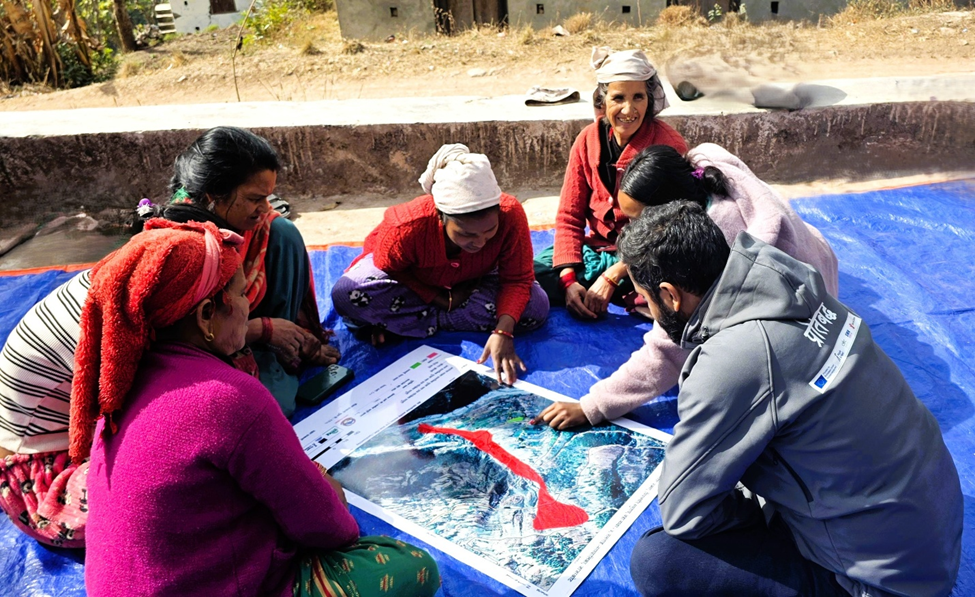
Pipalchaur Evacuation Map Discussion at Nalgadh Municipality, Jajarkot


